Mini Pig Embroidery Design: A Practical Review for Makers
When I first opened the Mini Pig embroidery file, I smiled. That is not something I say often about digital designs. Many animal motifs come across as stiff or overly complicated, but this one has an immediate warmth. The shape feels rounded and friendly, the expression reads as playful without being cartoonish, and the overall layout suggests a design that was built with actual stitching in mind. As someone who has tested hundreds of machine embroidery design files across hats, totes, baby items, and home decor, I have learned to spot the difference between a design that looks good on a screen and one that holds up under needle and thread. Mini Pig leans toward the latter, and I want to walk through why that matters if you are planning to use it for real projects.
I decided to test this design mentally the way I would for a client order. The scenario I kept returning to was a small farmstand owner who wanted a set of custom canvas tote bags for her regular customers. She needed something memorable, clean, and tied to the Farm Animals theme without being overly literal. A pig silhouette might feel generic. A detailed barn scene could be too busy. Mini Pig sat right in the sweet spot: recognizable, charming, and easy to pair with simple text or a farm name underneath. That kind of versatility is exactly what I look for when evaluating whether a design is worth adding to my regular rotation.
What the Mini Pig Design Feels Like Before You Even Stitch It
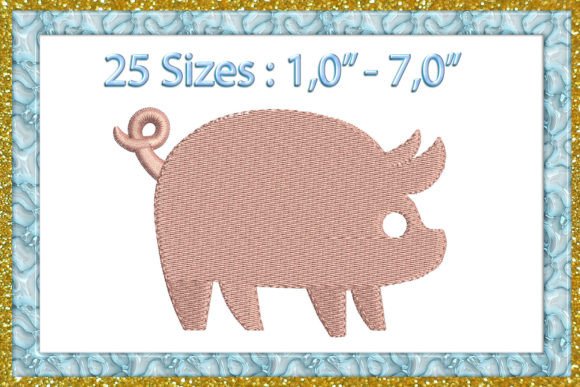
First impressions matter, especially when you are scrolling through dozens of options for a specific project. Mini Pig has a sense of softness that immediately suggests it belongs on fabric. The ears have a gentle droop, the body is compact without being squished, and the little curly tail detail gives it just enough personality. This is not an aggressive or overly detailed farm animal illustration. It is the kind of design that makes people pause and say, "That is adorable," which is precisely the reaction you want on a handmade product.
From a technical standpoint, the design appears to rely on a balanced mix of satin stitch outlines and fill stitch interior sections. The contours look clean, and the transitions between filled areas and open spaces seem intentional. I always pay attention to negative space in embroidery because too much density can make a design feel heavy and stiff on fabric. Mini Pig seems to breathe, which tells me the digitizer understood how thread behaves on different fabric texture types.
Where This Little Pig Shines Brightest
If you are a craft business owner or Etsy seller looking for a design that fits multiple product categories, Mini Pig is a strong candidate. I can see it working beautifully on a tote bag design for farmers market shoppers, a sweatshirt embroidery piece for a casual fall collection, and especially on baby embroidery items like onesies, bibs, and nursery blankets. The scale of the design feels naturally suited to smaller and medium-sized placements, which means it can adapt to everything from a chest logo position to a larger back panel on a toddler tee.
One area where I think Mini Pig would genuinely excel is personalized gift projects. Picture a set of kitchen towels with this little pig embroidered near the corner, paired with a family name or a short phrase like "Home Grown." The farmhouse appeal is obvious, but the design is not so rustic that it feels out of place in a modern kitchen. That balance between farmhouse charm and everyday cuteness is harder to achieve than it looks, and it is one of the reasons I would confidently use this design for holiday embroidery gifts, housewarming presents, or even wedding favors for a couple who loves animals.
Caps, Aprons, and the Curved Surface Challenge
I always think about curved surfaces when evaluating any embroidery project. Caps and hats are notoriously tricky because the design needs to sit correctly on a domed surface without distortion. Mini Pig has a compact, centered composition that should handle cap placement reasonably well, provided your hoop size and framing are correct. The same applies to aprons, where the design might sit on a bib area that bends and moves during wear. The rounded shape of the pig means there are no awkward corners or long thin elements that could warp. That is a practical advantage I appreciate.
Real Stitching Concerns Every Maker Should Consider
No design is perfect for every situation, and Mini Pig comes with a few considerations that experienced embroiderers will want to keep in mind. Small details, like the eyes and the snout definition, are critical to the design's personality. If the stitch density in those areas is too high, you could end up with puckering on lightweight fabrics. If it is too low, the facial features might lose clarity. I always recommend testing on a scrap of the actual fabric you plan to use before committing to a final product.
Thin fabrics and stretchy materials deserve extra attention here. A baby onesie made from soft cotton jersey will behave very differently from a sturdy canvas tote. On stretchy fabrics, I would use a quality cutaway stabilizer and possibly a topping film to keep the stitches from sinking into the knit. On dark fabrics, thread colors become especially important. The pink tones of the pig need enough contrast against a navy or charcoal background, or the whole design can look muddy. I suggest stitching a quick test in black and white first to check whether the tonal values hold up before you load your machine with color.
Dense Stitch Areas and Fabric Behavior
If Mini Pig includes any running stitch underlay beneath the main fill areas, that will help stabilize the fabric and reduce shifting. But I would still watch the overall stitch count. A design that looks light and playful on screen can sometimes surprise you with a dense stitch load that makes the finished product feel stiff. This matters most on items that need to drape well, like t-shirts, or on products that get frequent washing, like kitchen towels and baby blankets. A stiff embroidery patch on a soft fabric can irritate skin and crack over time. I always advise checking the design's density before running a full batch.
How Mini Pig Affects Product Value and Customer Perception
When you sell a handmade item, the embroidery is often the first thing a buyer notices. It sets the tone for quality, care, and brand identity. Mini Pig has a design personality that communicates warmth and attention to detail. That can translate directly into higher perceived value. A simple tote bag becomes a thoughtful gift. A plain sweatshirt turns into a boutique product. For small shop product owners, this kind of design can help build a cohesive brand story, especially if you lean into farmhouse, rustic, or animal-loving niches.
I also think about how a design photographs. Printable mockup images and listing photos are essential for online sales. A clean, well-proportioned design like Mini Pig tends to show up well in flat lays and lifestyle shots. The shape is readable at a glance, which is crucial for thumbnail browsing on platforms like Etsy. If a customer cannot immediately tell what the design is from a small photo, you lose their interest. Mini Pig passes that test easily.
Commercial Use and Licensing Clarity
Before you stitch Mini Pig onto products for sale, make sure you understand the licensing terms. Many digital embroidery file purchases come with restrictions on commercial use, and the rules vary widely between designers. Some allow finished product sales with no limits. Others require attribution or cap the number of items you can sell. I cannot stress enough how important it is to confirm this before you invest time and materials into a product line. The same applies if you plan to use the design as part of design assets for branding or digital mockups. Always check, save the documentation, and respect the creator's terms.
Practical Notes for a Smooth Stitching Experience
Over the years, I have developed a short mental checklist I run through before loading any new embroidery file onto my machine. For Mini Pig, here is what I would recommend:
- Test on scrap fabric first. Use the same fabric type and stabilizer combination you plan to use for your final project. This is not optional.
- Check thread color contrast. The pink and grey tones in the pig design need to pop against your chosen background. Test on both light and dark swatches.
- Confirm hoop size. While the design looks compact, always verify the exact dimensions before hooping. Guessing leads to wasted material.
- Inspect small details. The eyes, snout, and tail curl are personality hotspots. If those areas look muddy after stitching, adjust your tension or stabilizer.
- Use proper stabilizer. For stable wovens, a medium cutaway works well. For knits, go with a firm cutaway and consider a water-soluble topper for crisp edges.
- Test in monochrome. A quick black-and-white mockup or grayscale preview can reveal contrast issues that color previews hide.
These steps take extra time, but they are what separate a finished product that looks professional from one that looks like a practice run. If you are building a craft business or selling on Etsy, consistency is everything. Customers expect the same quality they saw in your listing photos, and a little upfront testing protects your reputation.
Where Mini Pig Fits Into a Real Product Lineup
I think about Mini Pig as a design that fills a specific gap in an embroidery project library. It is not a generic farm animal clipart conversion. It has character. It would sit comfortably alongside other Farm Animals designs in a collection, but it could also stand alone as a featured piece on a baby shower gift or a springtime market tote. For custom apparel decorators, this design offers a playful option that does not feel juvenile, which means it can appeal to both kids and adults.
An embroidered patch version of this design would be another interesting application. If the outline is clean enough, you could stitch it on felt or twill, add a merrowed edge or a simple satin border, and create a sew-on or iron-on patch for denim jackets, backpacks, or caps. The compact shape makes it patch-friendly, and the cute factor would attract buyers looking for unique accessories.
For holiday embroidery projects, Mini Pig could easily adapt to seasonal themes with a few thread color changes. A soft peach pig with a tiny floral accent works for spring. A deeper pink with a small heart detail fits Valentine's Day. The base design is flexible enough to let you experiment without losing its core identity.
Final Thoughts From the Stitching Table
I have reviewed enough embroidery designs to know that cuteness alone does not guarantee a good stitch-out. What gives me confidence in Mini Pig is the way the design balances personality with practicality. It reads clearly at multiple sizes, it suits a range of products from baby items to home decor, and it has the kind of timeless appeal that does not rely on trends. For makers, that means you can use it across seasons and collections without it feeling dated.
If you are an Etsy seller, a market vendor, or a hobbyist who stitches gifts for friends and family, this design deserves a spot in your library. Take the time to test it properly, choose your fabrics and threads with care, and you will end up with a finished product that genuinely delights people. That is the whole point of what we do, and Mini Pig makes it easy to deliver that moment of joy.