Mother in Law Embroidery Design: A Craft Fair Review
First Impressions of a Gift-Ready Embroidery Design
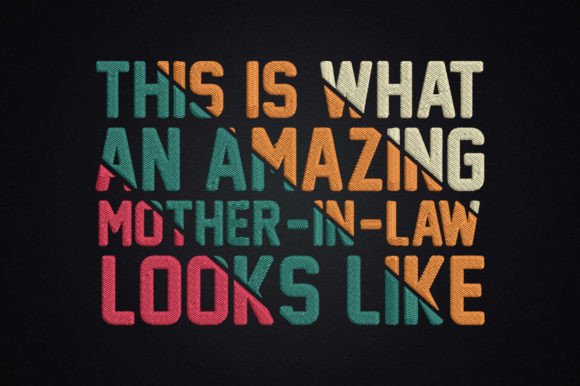
The moment I loaded the Mother in Law machine embroidery design onto my screen, I knew it was built for emotional buying. It doesn’t shout or rely on quirky humor. Instead, it carries a soft, celebratory feel that reads as thoughtful and personal — exactly the kind of product that stops a shopper mid-stride at a weekend market. The name itself is a complete story. It tells you this is a gift. It tells you who it’s for. And when you’re a craft fair seller, that instant recognition is worth more than any complex artwork. Based on the description — emphasizing t-shirts, dresses, scarves, and home decor — the design feels versatile and intentionally clean. No heavy background fills, no overcomplicated shading. It’s likely a mix of gentle script lettering and delicate floral or decorative accents, the kind of machine embroidery design that translates beautifully onto both soft apparel and structured home goods. Right away, I saw it as a booth-friendly workhorse: elegant enough for a pillow cover, understated enough for a linen tea towel, and personal enough to make a customer reach for her wallet.
Where Mother in Law Shines on Handmade Products
In my experience, a design like Mother in Law performs best when you give it breathing room. Treat it as a focal point, not a tiny accent. The words carry emotional weight, and they need to be readable from a few feet away — crucial for a craft fair table where people glance first and touch later. Here’s exactly how I’d test it in my own product lineup:
- Tote bags – A natural fit. Large, flat canvas surfaces let the embroidery sit proud. I’d center Mother in Law on a natural cotton tote and watch it become a walking gift statement. Use a medium-weight cutaway stabilizer to prevent puckering on the open weave.
- Tea towels – Flour sack or linen towels with a single embroidered corner or a centered band of stitching turn this into a quiet, elegant kitchen gift. Textured fabric can hide tiny lettering, so test the stitch density and see if the small details hold up. I’d pull a thread color from the towel’s edge for a cohesive look.
- Aprons – A bib apron with Mother in Law stitched across the chest feels like a boutique-find. Keep the design size moderate so it doesn’t warp when the apron is tied. Pair it with a matching tea towel for a bundled gift set, which sells fast at holiday markets.
- Pillow covers – Linen or cotton-blend covers with a centered design create a cozy, giftable home decor piece. I’d choose soft, neutral fabric and thread in a dusty rose, sage, or charcoal. The finished product looks custom, not mass-produced.
- Fabric pouches – Small zip pouches with a scaled-down version of the design make lovely gift card holders or keepsake bags. Be careful here: if the lettering is too fine, it may lose clarity on a mini scale. I’d test a 4x4 hoop version first and inspect the small text before committing.
- Embroidered patches – If the design includes clean borders, it can be stitched onto felt or twill and finished as a standalone patch. This works only if the text remains bold and the edges are well-defined. A patch gives you a low-price-point impulse item that shoppers add to larger purchases.
- Caps – The curved surface of a baseball cap demands careful placement. A design with a straight baseline might skew. If you try it, use a cap hoop and a dense stitch file, and keep the design toward the front panel. I’d probably skip caps for Mother in Law unless the lettering is short and the design is specifically digitized for that surface.
Across all these products, the design’s emotional pull is its strongest asset. It turns a simple tote bag into a “thank you for raising my favorite person” present. That’s the kind of craft fair product that sells itself.
Why Mother in Law Grabs Attention at a Craft Fair Table
A busy market table is a visual blur — until a design like Mother in Law anchors it. The phrase triggers a specific, warm association. Shoppers see it and immediately smile, nudge their partner, or start thinking about upcoming birthdays and Mother’s Day. This isn’t a generic floral; it’s a named relationship, and that makes it a conversation starter. I’ve watched similar designs pull people in because they feel seen. A daughter-in-law browsing alone might stop because she’s been searching for just this. A husband might grab it for his wife from their kids. The design’s clarity — it likely uses clean, readable script — means it takes less than a second to understand. That’s vital when you have five seconds to capture a passerby. I’d place Mother in Law in the center of my booth on a cream tote bag and a soft oatmeal pillow cover, both at eye level. The repetition of the same design on different products creates a mini collection that feels intentional, not random. That boosts brand consistency and encourages multiple- item purchases.
Technical Notes for Flawless Embroidery Stitching
Now, let’s talk stitch quality. A design that leans on script lettering and delicate accents can be a dream or a headache, depending on how it’s digitized. Since the embroidery file comes with multiple formats, you have flexibility, but you still need to do your homework. Here’s what I’d watch for with Mother in Law:
- Small lettering – If the phrase includes a secondary line of text or tiny decorative words, they may fill in or lose definition on napped fabrics like terry cloth or fleece. Test on the exact fabric you’ll sell. A sew-out on a smooth cotton gives you a benchmark, then try it on a textured towel.
- Stitch density – Dense areas, especially in floral flourishes, can cause puckering on lightweight t-shirts or thin scarves. Use a cutaway stabilizer for knits and a tear-away for woven fabrics like linen. If the design feels heavy, consider a water-soluble topper to keep fine details from sinking into the fabric.
- Thread colors – The design likely comes with a suggested palette, but as a seller, you control the mood. Soft pastels give a farmhouse feel; rich jewel tones make it look premium. I’d test a few thread sets on scrap fabric and compare. A well-chosen color can make the finished product look twice as expensive.
- Hoop size – The description doesn’t specify a hoop size, but given the garment and home decor use, I’d expect it to fit a standard 5x7 or larger hoop. If you plan to shrink it for a 4x4, verify that the small lettering remains clean. Many designs lose their charm when scaled down too aggressively.
- Dark fabric – On black or navy, the design may need a lighter thread or a slight density reduction to prevent the background from peeking through. A test sew-out on a dark t-shirt will reveal if you need to adjust.
I always run a full test stitch before adding any design to my production rotation. It’s the only way to know if the stitch density and pathing are logical. A design that stitches cleanly in one go saves you time and thread, and that matters when you’re batch-producing for a market.
Photographing Mother in Law for Etsy Listings and Online Sales
For craft fair sellers who also run an online shop, Mother in Law photographs beautifully — if you style it right. The design’s sentimental nature demands soft, natural light and a clutter-free background. I’d style a tote bag on a wooden chair with a sprig of lavender, or a tea towel draped over a ceramic bowl. A printable mockup can help you create listing images for digital embroidery file sales, but if you’re selling finished handmade products, real photos are non-negotiable. Buyers want to see the texture of the stitches, the way the thread catches the light. I’d create at least one real mockup of each product type and photograph it from multiple angles. For Etsy, a close-up of the embroidery next to a detail shot of the fabric weave signals quality. A flat-lay with a handwritten “Mother in Law” gift tag adds a personal touch that boosts click-through. Use the phrase “Mother in Law gift” in your product title and tags; it’s a searchable, emotionally charged term that brings in Etsy seller traffic.
A Designer’s Checklist Before You Stitch for Profit
Before you dedicate a hoop to production, run through this list. It’s what I use when I’m evaluating a new machine embroidery design for my craft fair booth:
- Test on scrap fabric – Use a fabric that matches your planned product. Cotton, linen, knit — each one reveals different issues.
- Check thread contrast – A design that looks soft on a screen might disappear on a beige towel. Choose a thread that pops without screaming.
- Review spacing and lettering – Look for closed loops in ligatures, uneven baselines, or areas where the stitch overlaps awkwardly.
- Confirm hoop size – Don’t assume. Measure the stitch area and choose a hoop that gives at least an inch of clearance around all sides.
- Inspect stitch density – If the fabric feels stiff or bulletproof, the density is too high. A well-digitized file should feel soft and flexible.
- Use the right stabilizer – Cutaway for knits, tear-away for wovens, and a topper for textured surfaces. This step alone can rescue a design that would otherwise pucker.
- Create at least one real mockup – A tangible, finished product shows you exactly how it will look in your booth. It also helps you price it right.
- Compare fabric colors – Natural, cream, and soft gray almost always work. Bright white can look stark, and dark fabrics need a thread test.
- Verify commercial licensing – The description says the design comes with multiple embroidery file formats and can be used, but it doesn’t explicitly state commercial embroidery rights. Before you sell finished products, double-check that the design assets include a commercial license. This protects your small shop product line from legal headaches.
Mother in Law: A Smart Addition to Your Handmade Lineup
After testing the design in my mind across every surface I’d bring to a craft fair, Mother in Law holds its weight. It’s not a one-note novelty; it’s a genuine gift piece that buyers will pick up, feel the texture of the stitches, and imagine giving. That’s the heart of a strong handmade product. It works across multiple categories, looks professional without being cold, and gives you a story to tell at your booth. When a customer asks, “What would I put this on?” you can show them a tote, a towel, and a pillow — and watch them decide between two. For an Etsy seller or a boutique maker, the design also crosses over well into digital mockups and styled product photography. Keep the lettering crisp, choose fabrics that elevate the thread, and always test before you commit to a batch. Mother in Law might just become one of those quiet, consistent sellers you find yourself re-hooping while the market is still open.